


For each piece in WITM, I would like to share with you the original thought, the initial ‘wave’ that inspired it. This one came in two parts.
The first one came to me at 2 am while I struggled to fall asleep; a forgotten memory suddenly became vivid. Here’s what I wrote:
Dadi’s little shelf in her Godrej cupboard which contained all the vestiges from her time pre-partition in present-day Pakistan. Rusted boxes, black-and-white photos of people looking very serious, a chandi spoon. Her sitting by it, telling us stories. It was her own little creative production, the first I’ve ever witnessed.
The second:
From a poetry reading, where the poet David Whyte reads his poem ‘Just Beyond Yourself.’ When he spoke about what drove him to write this poem, he shared advice a friend gave him: “Get beyond yourself. Get over yourself. Always be more generous than you thought you could be the first time.” When I heard this, I recognised something deeply familiar in it. Anyway, you’ll see what I mean.
Now, on to the piece…
What is a museum? My earliest memory of it takes the shape of a small shelf in an old Godrej wardrobe. The inside of this shelf was lined with old, brittle newspapers that served as the wallpaper.
To visit this museum, you needed access to its curator: my dadi. She wasn’t really my dadi but my great-grandfather’s sister. To my large, joint family of 16, she was Dadi to us all. For the majority of my childhood, we lived in the same flat, which meant I had privileged access to her museum.
Within it, lay vestiges of a life she deeply valued and missed: old, withering photographs of her family, round and square-shaped copper and silver boxes, old shoes, rusted trinkets and coins.
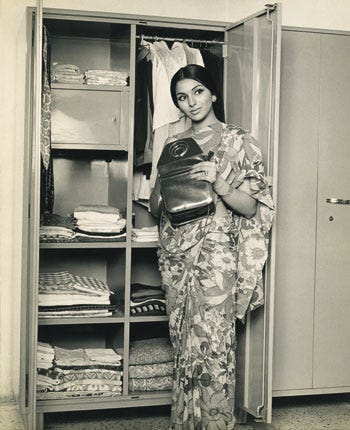
Dadi was the curator and the docent. She gave me a tour every few months. She would sit—in her all-white kurta—on a small stool with the wardrobe open and the relics on display. Each time, she would either open with or intersperse the origin story: the forced departure from her home in Nawabshah, in the Sindh Province of Pakistan, during the Partition of India. It went something like this: “We were wealthy, very well to do, and we had so many sacks of guineas (gold coins) in our house. But we had to leave all of it behind. We came to Bombay on a cramped boat, with nothing except a few personal belongings, and the clothes on our back.” When I look back, my mind draws the image of her and my grandfather, his younger brother, their parents, in a crowded boat, en route to a new city that held promise of refuge from the ensuing violence and chaos. I don’t know all the details of this period, except that my family were zamindars who went from very wealthy to very poor in a week.
The aftermath of life in this new city of refuge was relayed to me by my father. I learnt that my great-grandfather took up a job as a taxi driver. In the 70s, there were days when they had maybe ₹30 in the bank to support the entire family.
But this is not a story of strife.
My great-grandfather, the leader of the family, was hardly a defeated person. Like the moniker for Dadi, everyone called him Daddy, regardless of their relation to him. He passed when I was an infant, but I learnt that he was a proud, sometimes truculent, often kind, patriarch. He held many beliefs, but perhaps the most brazen of them all was his belief in “going beyond yourself.” I’ll never know if he thought of it this way, but he certainly practiced it. It meant stripping the reality of your circumstances of their power. Of never allowing scarcity to define the way you live.
It was about the illusion of abundance in an era of paucity.
Up until the 80s, my family of (then) 12 people lived between two cramped 500-square-foot apartments in a building made by enterprising refugees. There was never enough space, but if a friend needed a place to crash, Daddy would find room in the house and never ask them to leave until they were ready. If they had a little more in the bank than usual, the women of the house were tasked with preparing feasts that included copious amounts of mutton and whiskey.
Money was never really a matter of how much. It wasn’t about smart planning or a 50-30-20 saving plan. It was about the illusion of abundance in an era of paucity.
This concept of going beyond yourself became deeply embedded in our family’s relationship with money for decades to come. When my grandfather wanted to become a pilot, he knew he had no money for his training. Knowing it might be a Sisyphean task, he tried anyway by working multiple jobs and going far beyond himself to eventually put himself through flying school and land a job. When my father had to buy a home, he quite literally went beyond by throwing most of his savings into the home, and then somehow turning it for a profit.
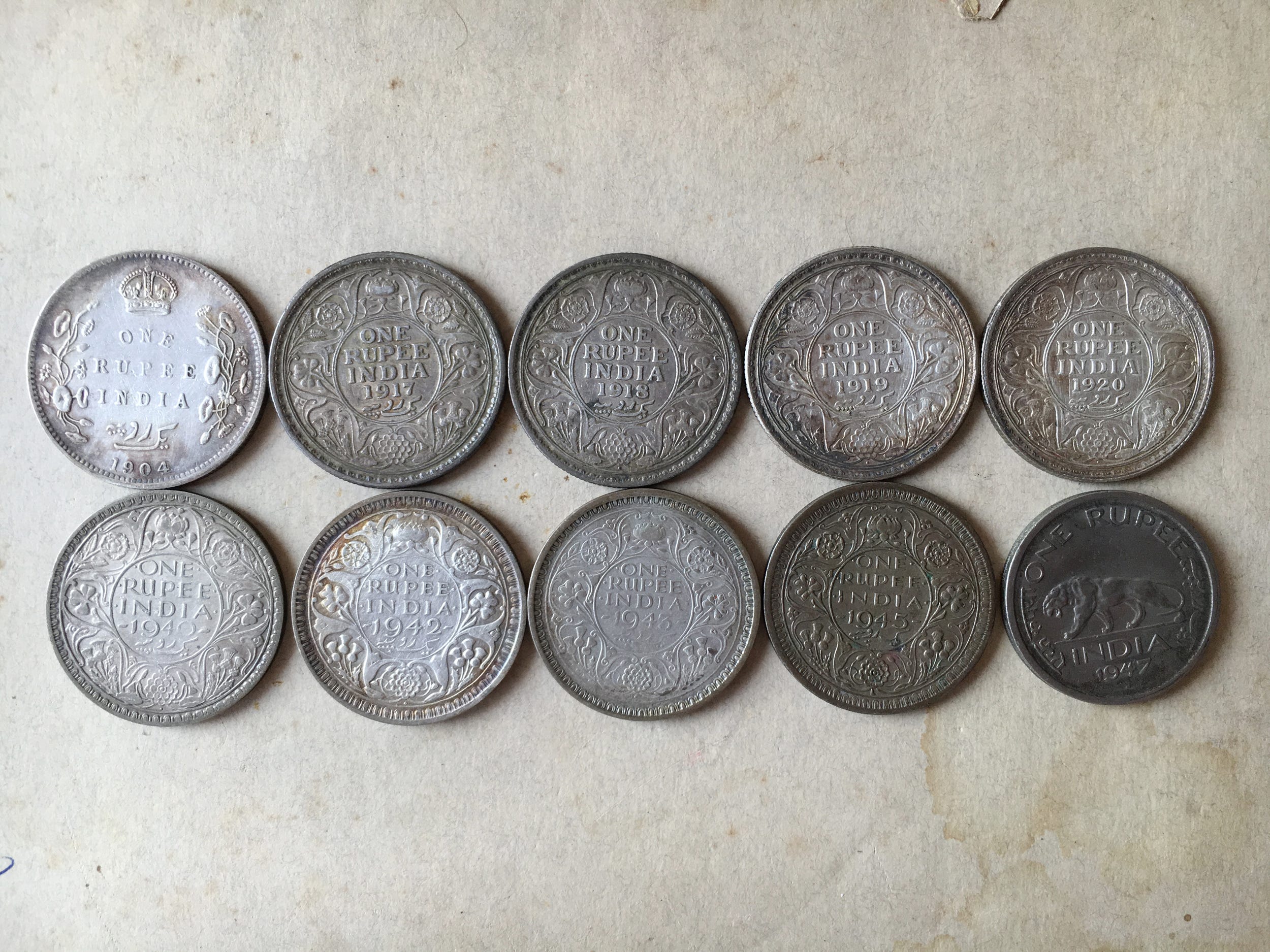
This was the money narrative I inherited.
The reality of money as an adult is, of course, very different from these narratives of youth. They become guideposts for the future. Adulthood becomes a negotiation between narrative nurture and experiential nurture.
I worked a couple of jobs for about four years and then decided to freelance in early 2023. Stable income is a concept I’m no longer familiar with. I chose this path under the innocent notion of being able to choose my hours – to balance work that brought even a modicum of joy to projects that allowed me to exercise my skills in service of a client, and most importantly, a fee. Despite this intention, I jumped on the money wagon repeatedly, accepting projects as they came my way because I wanted the money. It didn’t matter if the work did not serve me professionally. I couldn’t say no.
I’m not sure when it happened, but soon, the reality of money crept in and colored everything. All decisions, whether I realised it or not, came down to money, and how much of it I had. Need to get my teeth fixed? Maybe next quarter once that long-standing project is done and the balance is paid. Health insurance? Necessary, but let’s find the thriftiest way of owning insurance. Friends asking for a holiday? If the savings allow it. A ten-step skincare routine? Just two steps for now, thank you. Money became the common denominator in daily decision-making. Going beyond yourself slowly gets lost in the daily acts of basic arithmetic.
Though not entirely.
I surprised myself in a recent conversation with my partner. In a very adult conversation about our future and shared dreams of building a home together, my partner, the absolute realist, reminded me of the changes we would need to make to afford the kind of apartment we wanted in a city with eye-wateringly expensive rents. I looked unfazed. He then asked me, “Aren’t you afraid? How does it not scare you?” and almost instantly, I told him it didn’t. I grew up in a house where we made a lot with a little, so I knew we too could figure it out. Our conversation ended soon after. I’m not sure if he regarded me as foolish or found it reassuring. But it did make me wonder where I, a freelancer, found the confidence to tell my partner, who has a stable job, that we’ll figure it out? I don’t have the answer.
There are two versions of the self here. One that looks into the future with certainty that we’ll figure it out. And the second, a very real uncertainty of the day-to-day where the money isn’t enough. How do I reconcile these worlds? Maybe I don’t. At least not yet. And, I’ll never really know if my family’s approach was courage or denial, or both.
For now, the museum no longer exists. The story remains. The money narrative is the inheritance I hold toward the future. In the present, I’m getting ready to send a few polite reminders about unpaid invoices.
Best use of the word truculent